
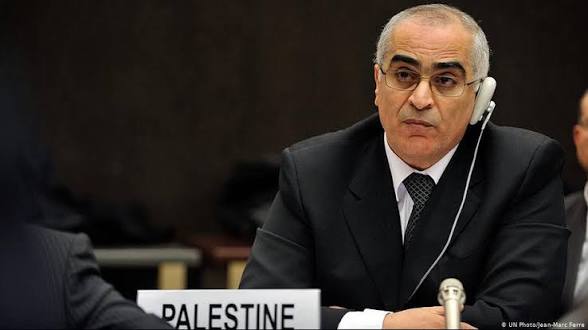
Palestine’s Permanent Representative to the United Nations in Geneva, Ambassador Ibrahim Kharishi, stated that the report presented by the UN Special Rapporteur on the situation of human rights in the Palestinian territories occupied since 1967, Francesca Albanese, to the Human Rights Council, reveals widespread, systematic torture of Palestinians that rises to the level of collective punishment and genocide.
Kharishi explained that what the Palestinian people, particularly detainees, are subjected to represents some of the most horrific forms of physical and psychological abuse, used as tools of control, intimidation, and the undermining of fundamental rights, foremost among them the right to self-determination.
He made these remarks during the 61st session of the Human Rights Council under Item 7, discussing Albanese’s report, which is based on hundreds of testimonies regarding torture and ill-treatment since October 2023. The report documents beatings, sexual assaults, starvation, and deliberate humiliation, including forcing detainees in Israeli prisons to eat food from the ground and attacking them with dogs, within a broader system of intimidation that includes forced displacement, mass killings, and destruction of the means of life.
Ambassador Kharishi emphasized that Israeli violations target men, women, and children both inside and outside detention centers, with an unprecedented escalation in blockade, starvation, mass killings, forced displacement, and preventing the International Committee of the Red Cross from visiting detention centers for over two years. He called for urgent international action to halt the deteriorating situation, ensure accountability, and end impunity.
Addressing participants, he said: “You have followed what happened in Sdeh Teyman prison regarding torture, rape, and killings of detainees.”
He continued that the report concludes these practices, in their cumulative context, do not merely constitute individual acts of torture but amount to a systematic, collective form of torture, becoming a structural feature of a colonial-settler system directly linked to the crime of genocide against the Palestinian people. He stressed that the continuation of these crimes in the absence of accountability severely undermines the credibility of the international system founded on the rule of law.
The session witnessed wide interventions from countries and international organizations, including the Organization of Islamic Cooperation, the Non-Aligned Movement, several European and Latin American countries, China, Russia, Qatar, Saudi Arabia, Jordan, Oman, Malaysia, Indonesia, Turkey, Iraq, Sudan, the UAE, Slovenia, Spain, Egypt, Pakistan, Iran, and Portugal.
Countries such as Pakistan, Indonesia, Iran, and Malaysia stressed the need to hold perpetrators accountable, while others, including Spain and Slovenia, expressed support for the mandate of the Special Rapporteur and opposed any punitive measures against her, calling for respect for international humanitarian law and implementation of International Court of Justice decisions.
UNRWA also warned of the worsening humanitarian disaster and Israel’s campaign against relief workers, amid alarming reports on the conditions of detainees, with renewed international calls to adopt the report’s recommendations as a practical step to protect Palestinian rights and put an end to ongoing torture and violations.

